The Marshmallow Test: Mastering Self-Control

 Marshmallow Test Cover 2

Written by Walter Mischel, 336 pages, Little, Brown and Company (September 23, 2014)

Hardcover – $29, Softcover – $15, eBook edition – $15

Reviewed by Chris Wendel

In a Nutshell – A simple test determines so much. Is there hope for those of us that flunk it?

Who’s it for? – Anyone who simply wants more self-discipline.

Quote from author – “In order to understand self-control, and the ability to delay gratification, we need to grasp not only what enables it but also what undoes it.”

 A business book best seller when it hit shelves last year, I found “The Marshmallow Test” in the psychology section of my local Horizon Bookstore. My search demonstrates how broad the business book genre has become in the past decade. What today is defined as a business- related book goes beyond CEO biographies, Wall Street investment advice, and start-up business books. Business book or  not, “The Marshmallow Test” holds true to its premise that all good things come to those who wait.

Let’s establish from the get-go that author Walter Mischel is an accomplished university researcher. He first developed the much publicized Marshmallow Test in the 1960’s, at a Stanford University run pre-school. Researchers presented the children with the option of eating one marshmallow placed on a plate in front of them immediately by ringing a small bell –or- if the children were able to wait 10-20 minutes, they would be awarded with two marshmallows. The testing generally predicted the children’s ability to exercise self-control and the delay gratification.  Over time, those same children grew up and were tracked. It was determined that those who did well on the Marshmallow Test had better social and cognitive development, achieved higher SAT test scores,  and had better self-worth later in life.

“The Marshmallow Test” also explains why a person may lose their composure in a particular situation is not an indicator of how they will respond in all situations. The philandering politician, who has the ill-advised affair with an office intern, can still work at a high level in important decision making situations. In other words, the snapshot collection of small moments that we all judge others by is not an accurate portrayal on how that person deals with situations across a broader spectrum.

Well explained biopsychology helps us understand our reactions to situations that challenge our will power and desire for instant gratification. This self-control is a psychological battle between the “hot” reactive part of the brain that traditionally dealt with primal danger and the “cool” more developed portion of the brain’s frontal lobe that rationalizes situations.

Situations that touch off a hot reaction (or lack of self-control) can be quelled by a refined cool system.  Techniques that teach one to focus on future ramifications in these situations can be developed over time, reducing the negative consequences of short-term temptations.

Mischel makes it clear that in our early years some of us are better than others at resisting temptation and regulating painful emotions. What gets a bit lost in the initial summary is that willpower skills can be improved significantly. It’s a relief to understand that we (and our children) don’t have to be pigeon holed into any permanently defined categories of behavior.

For most businesses, a premium is placed on hiring employees who can demonstrate self-control and discipline in a variety of situations. “The Marshmallow Test” in this context can be a valuable tool for choosing and developing talent.

“The Marshmallow Test” translates years of detailed research into information that readers will find both interesting and relevant.  For author Mischel, his book is part career retrospective, part self-improvement book.  His story of quitting his two-pack a day smoking habit makes the previously laid out research seem more realistic. Like the four year old children who are able to exhibit inventive techniques for delaying gratification, “The Marshmallow Test” offers strategies and hope for those with limited self-control .

Chris Wendel is an author, commercial lender, and business consultant living Traverse City, Michigan. He can be reached at cwendel@sunbearpress.com.
Book Review: “Hatching Twitter

Hatching Twitter

A True Story of Money, Power, Friendship, and Betrayal

Hatching Twitter Cover

Written By Nick Bilton

2013, Portfolio Trade, 320 pages

Hardcover $17.00, eRead version $7.99

Reviewed by Chris Wendel

Four out Five Stars

Most of us have an image of an inventor shaped by the works of Edison, Bell, and the Wright Brothers:  Hardworking souls toiling through hours of experiments until a groundbreaking innovation is discovered. Such is not the case for the founders of the social online networking service Twitter. Through the entertaining book “Hatching Twitter” by Nick Bilton, we’re able to see firsthand how the success of Twitter is more happenstance melodrama than relentless persistence.

Bilton, a New York Times columnist and writer, researched thousands of Twitter documents including employee emails, boardroom presentations, government communications, newspaper articles, and blog posts. Weaving these accounts together he created a fascinating chronology of how Twitter’s founders changed (intentionally or not) the world.

“Hatching Twitter” begins with short chapters on each of Twitter’s founders, drawn together by the desire to create something that will make them notable and rich. Evan Williams is the misunderstood son of a Nebraska farm family who migrates out west to Silicon Valley.  He eventually starts the web site Blogger, which he sells to Google. Williams parlays his Google windfall into a podcasting business which his friend Noah Glass convinces him to invest in.

The business, initially known as Odeo, at first operates in make shift work spaces, going between a small cramped office and a small apartment. New employees are hired in, each with unique skill sets and personality quirks. One of these hires, Jack Dorsey begins his work as a lowly contract programmer, his significance to the future of Odeo and Twitter is unanticipated.

Odeo works to position itself as the go-to application for podcasting. One night its plans are blown to pieces when Steve jobs announces that Apple is introducing the i-Pod, which includes a major podcasting platform. Odeo’s grand vision now destroyed, Williams calls a meeting to brainstorm what the company can do to survive and appease its investors.

It’s a 2 am conversation the following morning between Glass and Dorsey that takes the idea of text messages that can be broadcasted to a broad audience. Facebook is trying a somewhat similar concept on college campuses, but Glass and Dorsey seek a way to communicate their thoughts to friends that are not close by as a solution to their own loneliness.

The concept is tweaked at meetings that follow and a new direction is forged. The next question is what to call the new company.  Before Twitter was selected, we learn that names like Worship, Quickly, Tremble, Friendstalker, Vibrate, Twitcher, and Twitchy fortunately did make the cut.

Growing pains persist throughout the early months of Twitter. The company gains followers slowly at first. Twitter’s first marketing rollout event is at a disaster, but over time “tweeting” becomes trendy and hip and Twitter popularity worldwide.

As this growth accelerates, the company’s servers have persistent problems keeping up with the site’s burgeoning traffic. Investors become antsy with the technical issues but there are always new investors waiting at Twitter’s door step. The book’s more humorous episodes include failed and bizarre individual attempts to invest in the company from Al Gore, Ashton Kutcher, and Mark Zuckerberg (Facebook).

While Twitter is evolving so are the egos of its founders. Key players may be fired from Twitter but the inept staff left to manage become vulnerable themselves, resulting in a corporate environment that violates every administrative and human resources curriculum ever written.

We learn this from the Twitter story. Bad relationships chronically fester within even a successful business. People are willing to invest in a company even when it produces zero income for several consecutive years.

We also learn that the crazy and unlikely story of Twitter is extremely entertaining. “Hatching Twitter” is well written in a style lends itself to the drama and storytelling of a good movie script. Which may be author Bilton’s overarching intent.

Chris Wendel is with Northern Initiative in Traverse City.  Based in Marquette, Michigan, Northern Initiatives provides entrepreneurs with access to capital, technical assistance, and new markets throughout northern Michigan. http://www.northerninitiatives.com

Book Review: The Everything Store

Jeff Bezos and the Age of Amazon

everything store 2

By Brad Stone

Little, Brown and Company

Hardcover $28, E-Book version $10.99

Reviewed by Chris Wendel, Four out of Five Stars

“The Everything Store” tells the story of Jeff Bezos, one of the greatest innovators of our era, and a name that deserves to be mentioned in the same breath with Steve Jobs and Bill Gates.  Those not familiar with Bezos will want to hear about his rise from child prodigy to the founder of a company that is today the world’s largest online retailer (and technology behemoth).  How Bezos built the Amazon empire is a remarkable story. The way Amazon has reconfigured our traditional consumer sales decisions and built market share has also left plenty of carnage in its path.

Author Brad Stone gained unprecedented access to over 300 of current and former Amazon employees and many of Amazon’s adversaries. The end result is a firsthand account of key moments in Amazon’s climb to dominance. When it’s all said and done, “The Everything Store” is a wild and wholly ride demonstrating the sustained intensity needed to for a business succeed at the highest level.

As consumers we now don’t think twice about ordering items online and having them arrive at our home, or reading a book without going to a traditional library or bookstore.  Amazon makes this happen faster and cheaper, in a seductive way that many of us as customers grow to appreciate without thinking of the impact on smaller businesses.

Bezos himself is the driving force of a company that began as an idea in a New York City office building in 1994 and the intriguing main character throughout this book. As Amazon goes from selling books online and diversifies into an internet seller of videos, apparel, furniture, food, toys, and jewelry there is pressure internally at Amazon that manifests itself into constant strategic shifts and intense corporate friction. Bezos would rather have his employees have backbone and conviction than live in a state of comfort, where change and growth are potentially postponed.

According to Stone, Bezos makes sure that Amazon doesn’t get bogged down with sacred cow policy because Bezos quickly kills the sacred cows in his quest to transform Amazon into something much bigger (and better) than the  an online retailer. “The Everything Store” shares plenty of stories of Bezo insulting employees and going off the deep end in meetings. Harsh as he appears, Bezos is also the master of calculating how his chessboard like moves will play out further down the road. His is relentless goal oriented tenacity to implement new ideas is fascinating and is at the very heart of “The Everything Store”

Stone goes a good job of bringing the reader inside battles between the online giants Google, eBay, and Amazon. There is one point in “The Everything Store” when the traditional retail icon Wal-Mart loses a battle to Amazon over the acquisition of a smaller online retail company, demonstrating how quickly the internet has changed the way business takes place. Perhaps Stone’s only whiff is not is not addressing what happens if and when our entire economy becomes “Amazoned”.

Amazon’s rise to the top can be attributed Bezos and his amazing ability to look ahead and visualize the next big thing. “The Everything Store” will seem to some like a modern-day story of Amazon’s Gilded Age type greed. Yet, Amazon has a hand in technical innovations (online shopping, e-read books, cloud computing, web hosting for small businesses) that most of us interact with on a daily basis.

Connecting technology with consumer wants is best demonstrated in the book’s description of “Amazon Prime”, a membership based program that Bezos persistently championed. More recently, Bezos and Amazon have made news with the acquisition of the “Washington Post” and the announcement that Amazon was contracting with the US Postal Service for its own Sunday mail delivery.  These two events make it clear that Amazon’s has evolved into a technology empire that will have a major influence on our economic future.

Book Review: Detroit City is the Place to Be

Detroit City is the Place to Be

The Afterlife of an American Metropolis

Detroit City is the Place to Be

By Mark Binelli

2013, Metropolitan Books, 320 pages,

$28 hardcover, $12 E-reader version

4 ½ out of 5 stars

Reviewed by Chris Wendel

This is a book that might not fit the category of a typical business book. “Detroit City is the Place to Be” is as much about urban history and social behavior as it is about business development.

Detroit is a city that took plunge before the rest of America earlier this decade and fell further into the abyss more than any other city. Several books have recently made the rounds relating to Detroit’s scary new normal. My two choices were Mark Binelli’s “Detroit City is the Place to Be” and “Detroit, An American Autopsy” by Charlie LeDuff. After receiving strong recommendations on both, I opted Binelli’s book because of my familiarity with his previous work.

For years a popular adage was: “If Detroit sneezes, the rest of Michigan catches a cold.” While the city of Detroit proper no longer has a huge base of manufacturing jobs, it remains a major part of Michigan’s persona. Today, we are obviously influenced with state resources that are directed towards Detroit and the prevailing fact that Detroit remains the core of Michigan’s major metropolitan area.

Author Mark Binelli takes a long view of Detroit, going back to its original settlement by the French explorer Cadillac and following a reoccurring of pattern of violence and upheaval from the 1700’s through to Detroit’s pinnacle as the seat of America’s Industrial Revolution. Instead on playing the blame game on the massive failure of Detroit’s economy, Binelli illustrates well the stark contrast between what existed 40-50 years ago and what is left to deal with today.

Binelli begins with a reality check. A city of two million in 1967, Detroit was once the nation’s 5th largest city. It now has just over 700,000 residents and ranks 18th. Roughly 40 square miles of Detroit are now vacant land. For some perspective, all of San Francisco is 47 square miles. According to Binelli, in 2008 Detroit had 90,000 fires and the highest murder rate in the country.

Binelli’s narrative of Detroit’s early history through 1967 serves as a fitting backdrop to where Detroit has now landed, illustrating ongoing rifts between races and socio-economic groups, and the ongoing friction between Detroit itself and is outlying suburbs.

Without getting caught up in the blame game, “Detroit City is the Place to Be” spends the majority of its focus on present day Detroit, on who and what remains. Binelli immersed himself for many months in an area of downtown Detroit close to where his immigrant parents ran a knife sharpening business in the 1940-60’s. Growing up in St. Clair Shores outside of the city, Binelli had spent a good portion of his adolescence near the family’s Detroit business. His return in 2010 provides a startling first person account of the city’s pockets of new development and outlying empty urban prairie.

Binelli who is a gifted writer, novelist, and contributing editor with “Rolling Stone”, interviews dozens of Detroit’s current players including former mayor Kwame Kilpatrick, Detroit police chief Ralph Godbee, urban gardeners, tour guides of derelict buildings, movie film crews, neighborhood watch leaders, students at a school for pregnant teenagers, officials from the UAW local, longtime residents that stay, and even transplants to Detroit who move there from unlikely places such as Hawaii and Europe.

There are plenty of unique stories within the story here including a murder trial where Binelli is the only journalist showing enough interest to attend (because there are so many such trials within the city every day), and citizens protecting themselves and their homes with arsenals of guns and weapons. The result is a fascinating book that reveals the stark realities of today’s Detroit but also offers some glimmer of hope for a city that if we’re fortunate, will become a positive inspiration for Michigan’s future.

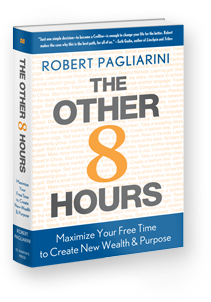
Book Review: The Other 8 Hours

The Other Eight Hours

Maximize Your Free Time to Create New Wealth and Purpose

The other 8 hours


By Robert Pagliarini

St. Martin’s Press, 2010

Hardcover $25.99

Reviewed by Chris Wendel

4 out of 5 Stars

Think of it this way. As a busy working person, you generally work at least eight hours a day and sleep (if you’re lucky) eight hours a night. But what about those other eight hours we have more control over? As its title suggests, the book “The Other 8 Hours” focuses in on the time in your day which can be used to “carve out more time in your day and find inspiration to spend that free time in a more productive way.”

The book’s author, Robert Pagliarini is convinced that this elusive but critical eight hour timeframe is not just what we use for relaxing and fun but it can be leveraged to pay off debt, make more money, start a business, develop a hobby, write a blog, or author that great American novel. Pagliarini explains that most of the important moments in our lives take place during those “other eight hours” (IE falling in love, birth of children, vacations, spending with friends with loved ones). In order to be true we we need to take control of those eight hours to do things that are creative, fulfilling, productive, and profitable.

For several days, my copy of “The Other 8 Hours” sat idle on a coffee table at home, while I kept wondered when the demands of work, family, and sleep would relent enough for me to read it. Eventually the whirlwind subsided enough for me to read and find this book you’ll likely find entertaining. Paglarini understands that although we’re all busy, there is still time to do things that really count in our lives. One key is to avoid a long list of time sucking activities that most of us participate in every day, including endless TV news cycles, addictions to internet and social media, obsessing over celebrity drama, video games, and watching sports. These guilty pleasures are termed “lifeleetches” which Pagliarini just doesn’t describe but provides useful strategies for eliminating.

“The Other 8 Hours” is part self-improvement book and part small business start-up guide, with some motivational speaking narrative thrown in for effect. The book isn’t just Pagliarini preaching though. Don’t know the first thing about marketing an invention, writing a blog or a screen play, publishing your own music or book? The chapter entitled “The Top 10 Cre8tor Channels” offers comprehensive and practical advice for each of these areas. To drive home his sometimes lofty talk of fulfillment and financial independence, Pagliarini provides relevant examples of others who have succeeded using his philosophy with practical, easy to follow flow charts for many of the process steps.

The promise of riches may still seem like a tremendous leap but Pagliarini is persuasive in his presentation. Like a salesperson who smoothly overcomes customer objections, Pagliarini provides plenty of arguments for people rationalizing with themselves (or a skeptical spouse or family member) the idea of doing more with their spare time to improve themselves personally and if perhaps financially.

“The Other 8 Hours” goes beyond just talking about people creating their own financial destiny and not settling for a regular 9-5 paycheck. The book is a true guide full of useful extras including a companion web site and downloadable templates for time management, both of which are legitimate facilitators for personal and professional growth.

Some of the resources mentioned in “The Other 8 Hours” may be already be a bit dated (the book was published in 2010), but essential for someone wanting to start a small micro-enterprise to generate additional income. In a genre of “reinventing one’s self to generate income” books that have developed since the 2008-09 economic downturn (IE “The Four Hour Work Week” and “Click Millionaires”), “The Other 8 Hours” is a book you’ll want to take time to read right today rather than tomorrow

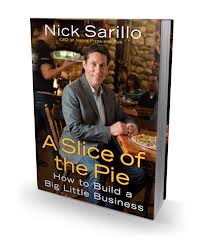
A Slice of the Pie

A Slice of the Pie

How to Build a Big Little Business

Slice of the Pie

4 out of 5 Stars

By Nick Sarillo

Reviewed by Chris Wendel

Running a restaurant is believed to be one of the most difficult feats for a business owner. So, imagine managing two restaurants during turbulent economic times. This is story of Nick Sarillo, the owner of the popular Nick’s Pizza in suburban Chicago, and his experience trying to make it all work when his financial advisors suddenly tell him that it’s time to shut the doors.

With this as a background, A Slice of the Pie takes a deep dive into building a business culture that is so clear and strong, that the infectious enthusiasm of Sarillo’s employees brings customers back again and again. Sarillo’s two restaurants gross six times the revenue of a comparable pizza restaurant, with an annual employee turnover rate of less than 20 percent.

Sarillo decided to open his first family restaurant with experience more as a carpenter than a traditional business background. Sarillo’s father had previously run a pizza business, but his Dad was rather old-school with an assumed mistrust of employees and an inability to escape the constraints of a traditional top down management style. Sarillo the younger learns through his own early life experiences that employees respond better when their opinions are valued and they become part of the business’ planning and growth process.

The development of Sarillo’s first restaurant focuses on creating a customer experience that is superior compared to any potential competitors, even when his father chides him for not building this restaurant on the cheap and for actually asking employees for their feedback. This feedback is the important factor in Sarillo’s tracking and rewarding metrics that allow employees to express their own personalities within the framework of a well understood (and followed) company purpose.

Adding a second Nick’s Pizza location provides a good case study for business owners contemplating a similar move. It’s the well documented managerial systems and metrics that make this expansion happen successfully.

Despite the rigors of managing two large family restaurants, Sarillo maintains the ability to step back and analyze his operation. This ability to “work on the business, not in the business” includes improving efficiencies, engaging in self-improvement, and for the most part, not micro-managing his people.

Sarillo’s skilled balancing act isn’t always enough. His lack of financial understanding, the economic upheaval of 2008-09, and with plans for expansion already under way, Nick’s Pizza suddenly finds itself at the brink of bankruptcy. The summary of these events are the most compelling part of the book. Not many business owners would be as frank and forthcoming, but Sarillo bares his soul, describing his own shortcomings when he is forced to face the ultimate question – How can I save my company and the employees that have made it so special?

The exact details of how Sarillo responds and defeats the odds is a secret that will only be revealed by reading A Slice of the Pie (hint: it has to do with an email). As you can guess, Nick’s Pizza survives, at least at the time of the book being published. Sarillo’s ability to endure has just as much to do with the management and culture shared by his employees as it does with the ability to build a business that the local community loves.  That community support plays a large hand in saving Nick’s Pizza in its time of despair.

A Slice of the Pie is an interesting read, although one has to wade through some later chapters that seem to be redundancies of ideas that were well explained earlier. It should be noted that the book’s foreword is written by Bo Burlingham, author of the bellwether book Small Giants. Forwards are usually gratuitous preambles, but Burlingham eloquently explains why Nick’s Pizza should be added the list of businesses that choose to be great rather than big.

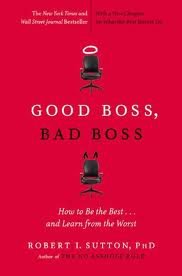
Book Review: Good Boss, Bad Boss

Good Boss, Bad Boss

How to Be the Best…and Learn from the Worst

Good Boss Bad Boss

by Robert I. Sutton

340 pages

Softcover, $16.99, Kindle Version, $9.99

Reviewed by Chris Wendel

4 out of 5 Stars

Tommy Lasorda the baseball successful manager and executive for the Los Angeles Dodgers once said that managing people is like holding a dove in your hand. “If you hold it too tightly, you kill it, but if you hold it too loosely, you lose it.”

All of us have a good idea of what makes a good or bad boss. When it comes down to it, everyone prefers to work under a good boss, but what exactly are the characteristics of a manager that makes this happen?

This pressing question is more than answered in Good Boss, Bad Boss, a recent book authored by Robert I. Sutton, Professor of Management Science and Engineering at Stanford University. Sutton implements psychological research along with interviews and case studies to explain the difference between exemplary managers that employees love and are truly dedicated to and those who’s bad behavior labels them as “bossholes”.

The book fortunately first focuses primarily on the habits and qualities of good bosses. Sutton explains that good bosses are keenly self-aware and avoid what is termed the “toxic tandem” of being too self-centered to realize that their employees are watching closely what their supervisor does.

When Linda Hudson was named the first female president of General Dynamics she dressed with a uniquely tied scarf on her first few days on the job. Soon she noticed several women in the large office wearing their scarves tied exactly the same way. The story serves as a lesson of how peers, superiors, and customers are watching the person higher up on the ladder for cues for patterning their own behavior.

A good boss also demonstrates empathy for employees, protecting them from inappropriate workplace behavior. The idea is to establish and maintain an environment where employees feel protected not just from rude behavior of other employees, but also from threats from further up the corporate ladder. The boss who fights these battles and takes the blame when things go badly (while also spreading around the credit when the team performs well) is rewarded with strong long term employee loyalty.

The good manager pays close attention to employees that are truly valuable and the employees that will do the consistent in the trenches work. Rewarding those who truly deserve it rather than the ones who boast about their accomplishments goes a long way towards building a strong dedicated team.

Another attribute of a good boss is being humble enough to realize that they don’t know everything. This humility goes along way when combined with the boss’ overall demonstration of persistent confidence.  Sutton points out that managers realize that running a department or company is more like a marathon then a sprint, with sustained but consistent behavior that creates a safe, productive work place.

The subject of bad bosses is addressed in the book’s Chapter 8: “Squelch Your Inner Bosshole” . Besides missing many of the characteristics of good managers, bad bosses wreak havoc in the workplace leaving many of their followers felling “disrespected, emotionally damaged, and de-energized”. Bad bosses many times are copying the behavior of their own bad boss role model or are reacting poorly to the pressure of missed deadlines, not reaching company goals, or demanding customers.

Many times this poor supervision becomes ingrained into the company culture. It may take adjustments at the very top to ask how change this behavior by instituting strict policies that stress courteous standards for treating fellow employees. Sutton suggests that bosses can keep themselves in line by offering a monetary reward to employees who tell them when they are being a jerk.

Good Boss, Bad Boss is essential to anyone who is managing people for the first time and those who have that nagging feeling that they should improve their managing skills. Sutton’s narrative does an excellent job of weaving together academic data with real life stories of boss behavior from both large and small businesses.

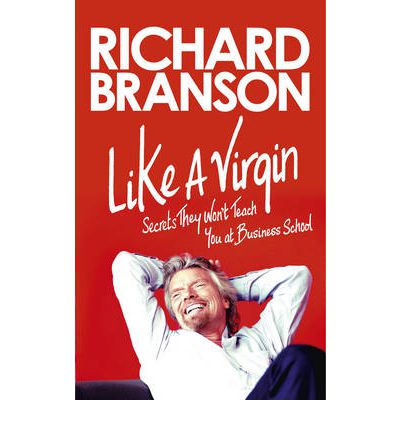
Book review: Like a Virgin, by Richard Branson

Like a Virgin by Richard Branson

Secrets They Don’t Teach You At Business School

Richard Branson

By Richard Branson

Portfolio/ Penguin Books

Published September 25, 2012

Softcover – $16.00, Kindle Version – $9.99

Reviewed by Chris Wendel

4 out of 5 Stars

Sir Richard Branson, the internationally famous entrepreneur, adventurer, and self-proclaimed icon has the distinction of being the only person in the world to “have built billion-dollar companies from scratch in eight different sectors”. As you can guess there’s some ego to get past here with Branson’s latest book, Like a Virgin. But as Walt Whitman once said, “If you’ve done it, it ain’t bragging”. Well, it’s safe to say that Branson has accomplished enough for him to be able to what say just about anything he feels like expounding on.

With this in mind, one also has to appreciate the walking handbook quality of this sometimes random, but incredibly insightful book. Learn from my mistake, and don’t try to plow through Like a Virgin, thinking that one chapter is a building preamble flowing effortlessly from one topic to the next.

Instead, I recommend taking a look at the book’s Table of Contents and using it more as a reference guide to issues that you have experienced or may have now with your business situation. This can be from the perspective of an owner, investor, or employee. There are roughly 75 different topics covered with these short vignettes. Having the perspective of someone like Branson, who has such a thorough and successful background, makes Like a Virgin a stellar resource. Here are some examples of the varied subjects and content:

The Perfect Pitch, provides best practices for anyone trying to raise money for a business or project. Branson has been on both sides of this table, and presents a no-nonsense approach that rationally explains the motives of both the investor and the borrower.

More Walking and Talking. Less Typing and Griping, will strike a chord with many stuck in office or professional situations where a key player would rather send a passive aggressive email than simply pick up the phone and effectively communicate. Anyone who has experienced the email that creates more questions than answers (and the resulting, time-sucking politics), will relate to this section.

Kick Start The Economy, lists 10 tips for jump starting the economies of the world, complete with a common sense prescriptions for what needs to be done and who needs to do it. Branson is certainly qualified to weigh in on this from his experiences.

The topics covered are up-to-date and wide ranging. This is guts of the book, and the insight from Branson is many times humorous and but always honest. It’s interesting to hear Branson admit and explain details of the businesses he started and that failed.

Branson also takes time to look back at others that have inspired him along the way, acknowledging that Steven Jobs is perhaps the greatest entrepreneur of all time. He believes that Jobs built his customer loyalty around innovative products. Branson then explains that the only way he knew how to succeed was to build his business around customer service. It’s these customer opportunities and recognized voids in the marketplace that are the inspiration for Branson’s diverse (in terms of product) business concepts.

Don’t get the idea that Like a Virgin is heavy on ground breaking business theory. The point is that Branson is a true entrepreneur that is able to innovate and adapt like no one else. I couldn’t help but imagine sitting down with Branson at a pub or coffee shop and having the ability to ask him anything about building a successful business. If that were to ever happen, the transcript from that conversation would sound something close to the content of Like a Virgin.  Like any storyteller, you might hear a few things more than once (Branson mentions multiple times how he started a music magazine), but that’s a minor demerit. If you’re looking for a refreshing alternative to the mindless drivel of most mass produced business books, Like a Virgin is a great choice.

Book Review: How Starbucks Saved My Life

HOw Starbucks - image

How Starbucks Saved My Life

A Son of Privilege Learns to Live Like Everyone Else

Gotham Books, 2007, 267 pages

Softcover, $14-, Kindle, Nook Version, $11.99

Reviewed by Chris Wendel

4 out of 5 stars

Life does not always allow us the time for all of the books we want to read. I remember hearing about “How Starbucks Saved My Life” when it was published in 2007, but had forgotten about it until I saw it recently at Horizon Books in Traverse City. I have grown somewhat weary of business books that reveal a magical concept and spend the remaining chapters reinforcing their supposed revelations. Something told me this book would be different.

Michael Gates Gill, author of “How Starbucks Saved My Life” was born into wealth. He graduated from Yale and immediately got a job through his network of college classmates for the major advertising firm J. Walter Thompson. Accomplished professionally with a large mansion and six figure salary, he seemed to have it all. Until his world comes crashing down and he finds himself in his 50’s, unemployed, divorced, and diagnosed with a brain tumor.

One day, lost in his post privileged life, “Mike” finds himself in a Starbucks coffee store, pretending to have an important meeting with someone who will never arrive. On a whim the store’s manager approaches and asks him if he is interested in working there. The manager is a young African American woman who Mike has little in common with. Desperate (and now broke), he takes the job, learning quickly how his pedigree doesn’t matter to his new boss or co-workers.  It is the jolting realization that making a living now puts him on equal footing with people he used to dismiss as uneducated or inferior. This moment forms the controlling  of the book.

“How Starbucks Saved My Life” is an entertaining first person narrative, going back and forth between Mike’s daily struggles to learn and keep his job as a coffee barista and flashbacks to the baggage of his upbringing, corporate life, and deep rooted biases. The book’s one drawback is the author’s habit of interrupting the flow of pivotal present tense situations with elongated and sometimes wordy flashbacks.

So how does Starbucks play into this? Like them or not, Starbucks provides the well-honed procedures and infrastructure that allow people to perform at a very high level, regardless of age or experience.  Mike’s well healed background matters little when it comes time to clean the restrooms, or deal with a long line of customers (or “Guests” in Starbuckese). However, within the Starbucks culture, Mike and each of his Partners are allowed to find some individual areas of expertise within the structure.

Over time the younger Partners and Mike become personally close. Mike finds that working at Starbucks is the great equalizer. Once that is understood, he truly appreciates the differences and strengths of each of his Partners.  Once this happens, Mike realizes something else.  That he is as happy as he has ever been, and that’s saying a lot.

Working as a team with defined daily tasks and goals, Mike and his team achieve a tremendous level of camaraderie and job satisfaction. In the end Mike is surprised when one day his grown children come to visit him at Starbucks are tremendously proud of his new line of work, his acceptance of others, and the way he’s changed him for the good.

“How Starbucks Saved My Life” is really about a courageous man who is forced to reinvent himself and be humbled in order to simply make a living. The real story here is Mike’s ability to excel as a Starbucks barista, while reaching a level of satisfaction in his work that he never had as a high-level advertising executive. In its small 260 page format, “How Starbucks Saved My Life” is a highly entertaining, weekend read that might just change your life… just like it changed Mike’s.

Linchpin, Are You Indispensable?

Book Review by Chris Wendel

Seth Godin is one of the most influential business writers of the last decade, with a litany of relevant topic books  (Tribes, Small is the New Big, Permission Marketing, Purple Cow) and his latest offering LINCHPIN, (Are you indispensible?), which addresses the ultimate role a person plays with their own professional life.

This subject is timely given the dramatic shift in work force parameters in the past two years. Long gone are promises of long-term stability with any position it seems, and Godin is quick to point out the sources and solutions to this phenomenon.

According to Godin, in the beginning (Genesis reference intended) our American education system was created for us to be trained and prepared for jobs where we are essentially a cog in a wheel, doing what is dictated, with the reward of long-term security and a decent salary.

Corporate owners for years sought ‘compliant, low-paid, replaceable, cogs to run their efficient machines”. This model according to Godin persisted until recent economic upheavals made the dynamic dysfunctional for many modern day workers.

This is amplified by the advent of out-sourcing of work offshore and further mechanization of many human work tasks. Today, the working class generally is never guaranteed a job, is paid relatively less, and must be more versatile in order to survive, let alone thrive. This also includes management employees that are paralyzed by efficiency driven policies that are guided more by stockholder earnings than a regard to long-term employee loyalty.

A third team has emerged during this time that Godin appropriately labels “linchpins”. Linchpins make themselves invaluable by creating relationships, adding an artistic element to their work, and creating new ways of doing things. Imagine there are no bounds to your creative abilities. Now imagine the work you did everyday included this creativity and the opportunity to include artistic expression into it as well.

After the consummate background that explains the evolution of the linchpins, Godin uses biopsychology, easy to adapt skills, and honest challenges to readers to change their mindset and unleash their artistry and unique genius. Incorporating many of these hidden skills is essential to both finding one’s niche in the new workplace and sustaining job satisfaction.

Linchpins have the opportunity going forward to “invent, lead (regardless of title), connect others, make things happen, and create order out of chaos”. Godin solidifies his theory with compelling references from recognized and respected experts. Too many on-topic business books form a first chapter premise and spend the rest of the reader’s time dwelling on repetitive regurgitations. Godin’s writing style however, is conversational and relevant in a short sectioned-out formats that flow easily from one to another.

LINCHPIN, Are You Indispensible? is an essential read for anyone who finds themselves at a professional crossroads, and can take the time to identify what it will take to be a building block in a great organization and to love their work at the same time.