
Jeff Bezos and the Age of Amazon
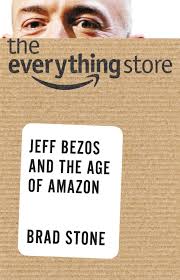
By Brad Stone
Little, Brown and Company
Hardcover $28, E-Book version $10.99
Reviewed by Chris Wendel, Four out of Five Stars
“The Everything Store” tells the story of Jeff Bezos, one of the greatest innovators of our era, and a name that deserves to be mentioned in the same breath with Steve Jobs and Bill Gates. Those not familiar with Bezos will want to hear about his rise from child prodigy to the founder of a company that is today the world’s largest online retailer (and technology behemoth). How Bezos built the Amazon empire is a remarkable story. The way Amazon has reconfigured our traditional consumer sales decisions and built market share has also left plenty of carnage in its path.
Author Brad Stone gained unprecedented access to over 300 of current and former Amazon employees and many of Amazon’s adversaries. The end result is a firsthand account of key moments in Amazon’s climb to dominance. When it’s all said and done, “The Everything Store” is a wild and wholly ride demonstrating the sustained intensity needed to for a business succeed at the highest level.
As consumers we now don’t think twice about ordering items online and having them arrive at our home, or reading a book without going to a traditional library or bookstore. Amazon makes this happen faster and cheaper, in a seductive way that many of us as customers grow to appreciate without thinking of the impact on smaller businesses.
Bezos himself is the driving force of a company that began as an idea in a New York City office building in 1994 and the intriguing main character throughout this book. As Amazon goes from selling books online and diversifies into an internet seller of videos, apparel, furniture, food, toys, and jewelry there is pressure internally at Amazon that manifests itself into constant strategic shifts and intense corporate friction. Bezos would rather have his employees have backbone and conviction than live in a state of comfort, where change and growth are potentially postponed.
According to Stone, Bezos makes sure that Amazon doesn’t get bogged down with sacred cow policy because Bezos quickly kills the sacred cows in his quest to transform Amazon into something much bigger (and better) than the an online retailer. “The Everything Store” shares plenty of stories of Bezo insulting employees and going off the deep end in meetings. Harsh as he appears, Bezos is also the master of calculating how his chessboard like moves will play out further down the road. His is relentless goal oriented tenacity to implement new ideas is fascinating and is at the very heart of “The Everything Store”
Stone goes a good job of bringing the reader inside battles between the online giants Google, eBay, and Amazon. There is one point in “The Everything Store” when the traditional retail icon Wal-Mart loses a battle to Amazon over the acquisition of a smaller online retail company, demonstrating how quickly the internet has changed the way business takes place. Perhaps Stone’s only whiff is not is not addressing what happens if and when our entire economy becomes “Amazoned”.
Amazon’s rise to the top can be attributed Bezos and his amazing ability to look ahead and visualize the next big thing. “The Everything Store” will seem to some like a modern-day story of Amazon’s Gilded Age type greed. Yet, Amazon has a hand in technical innovations (online shopping, e-read books, cloud computing, web hosting for small businesses) that most of us interact with on a daily basis.
Connecting technology with consumer wants is best demonstrated in the book’s description of “Amazon Prime”, a membership based program that Bezos persistently championed. More recently, Bezos and Amazon have made news with the acquisition of the “Washington Post” and the announcement that Amazon was contracting with the US Postal Service for its own Sunday mail delivery. These two events make it clear that Amazon’s has evolved into a technology empire that will have a major influence on our economic future.
 Small Business Focus